
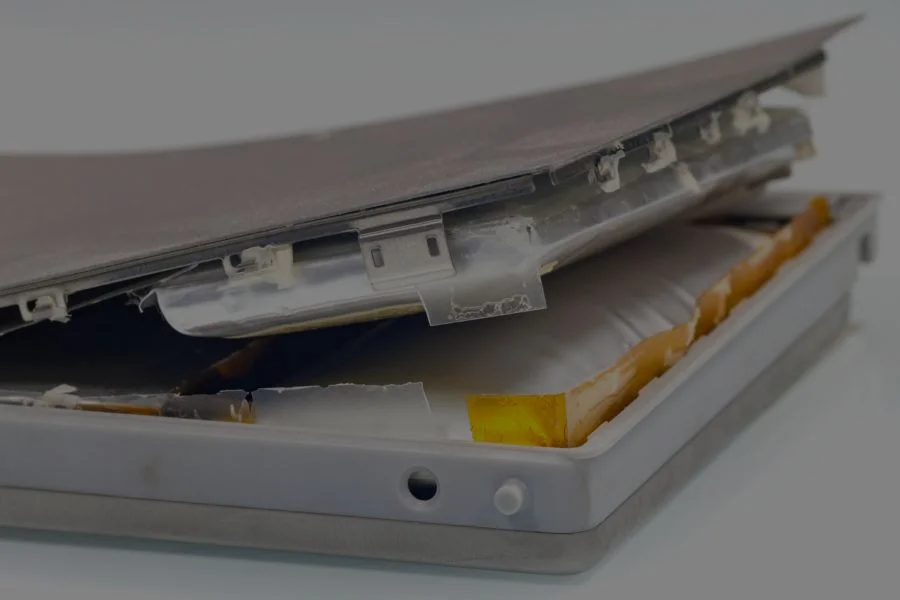
A DDR battery is a damaged, defective, or recalled lithium battery that may present a greater safety risk than a normal lithium battery because of physical damage, internal defects, misuse, or a safety recall. PHMSA notes that DDR lithium batteries are more likely than non DDR batteries to experience thermal runaway during transportation.
Some DDR batteries are easy to recognize because they are swollen, leaking, discolored, or physically damaged. Others may have internal safety problems that are not visible, or they may have been identified as defective or recalled by the manufacturer.
This guide explains what DDR means, how to identify a damaged or defective lithium battery, why these batteries require additional care, what to do with one, and how storage, transportation, and recycling may differ. If you are managing batteries that have reached the end of use, Battery Recycling and Solutions provides battery recycling services for a wide range of battery types and conditions.
What Does DDR Mean for Batteries?
DDR stands for damaged, defective, or recalled.
The term is commonly used for lithium batteries that may present increased safety concerns because of their physical condition, internal safety systems, history of use, or recall status.
Damaged Batteries
A damaged battery has sustained physical, mechanical, or other conditions that may compromise its safety.
Examples can include:
- Crushing
- Punctures
- Swelling
- Water exposure
- Damaged wires
- Burn damage
- Leakage
PHMSA identifies physical damage, leaking or venting, and suspected damage that cannot be diagnosed before transportation as conditions that may cause a lithium battery to be treated as damaged or defective.
Defective Batteries
A defective battery may have a problem that affects its ability to operate safely even when the issue is not obvious from the outside.
PHMSA notes that an assessment may need to consider factors such as short circuit protection, voltage or isolation measures, battery safety features, and internal components such as the battery management system.
That means a battery does not have to be visibly crushed or leaking to present a concern.
Recalled Batteries
A recalled battery or battery powered product has been identified through a manufacturer or consumer safety recall.
If a battery is subject to a recall, follow the instructions provided by the manufacturer or the applicable recall notice rather than treating it like an ordinary used battery.
How Can You Tell If a Battery is DDR?
Some damaged batteries are obvious. Others may require information from the manufacturer or someone familiar with the battery’s design and safety systems.
PHMSA identifies both visible and nonvisual conditions that can be relevant when assessing whether a lithium battery is damaged, defective, or recalled.
Swelling or Bulging
A lithium battery that has expanded beyond its original shape may be damaged.
Examples include:
- Swollen phone batteries
- Expanded pouch cells
- Bulging battery packs
PHMSA specifically lists swelling relative to the battery’s original condition as a visible sign of possible damage.
Leaking or Venting
Visible electrolyte, leaking material, vapor, or gas can indicate a serious battery problem.
Do not touch, open, or attempt to investigate leaking material yourself. A battery that is leaking or venting should be treated cautiously and evaluated before transportation.
Excessive Heat
A battery that becomes unusually hot or remains hot without an obvious reason may indicate an internal problem.
PHMSA notes that intense heat that does not quickly dissipate can be a sign of damage.
Discoloration or Burn Marks
Changes in the battery casing, scorching, or visible burn damage can indicate that the battery has been exposed to abnormal heat or physical stress.
PHMSA includes discoloration of the battery casing among the visible signs that should be considered during a DDR assessment.
Strange Odors or Corrosion
Unusual smells or visible corrosion around the battery casing or terminals can also indicate a problem.
Corrosion may appear in different colors and should not be ignored when evaluating battery condition.
Crushed, Punctured, or Deformed Casing
Physical or mechanical damage can compromise internal cells and battery safety systems even when the battery is not actively smoking or leaking.
A battery that has been crushed, punctured, bent, or otherwise deformed should not automatically be treated like a normal used battery.
Loose or Damaged Wires
Loose, exposed, or damaged wiring can indicate that a battery pack has been compromised.
PHMSA includes loose or damaged wires among the visible signs that may help identify a damaged battery.
Water Exposure or Known Misuse
A battery may also be damaged because of the conditions it has been exposed to.
Examples can include flooding, submersion, severe impact, excessive heat, improper charging, or other unintended use.
Why Are DDR Lithium Batteries Dangerous?
DDR lithium batteries can present a greater risk than lithium batteries in normal condition because damage or defects can interfere with the systems designed to keep the battery stable.
Thermal Runaway
Thermal runaway is an uncontrolled heating process inside a battery.
As the internal temperature rises, additional chemical reactions can generate even more heat. This can lead to:
- Smoke
- Fire
- Rapid heat generation
- Gas release
- Reignition
PHMSA states that damaged, defective, or recalled lithium batteries are more likely than non DDR batteries to enter thermal runaway during transportation.
A Damaged Battery Can Affect Nearby Batteries
A failing lithium cell can also create problems beyond the individual battery.
Heat, fire, or an exploding cell can spread to nearby batteries, devices, or combustible materials. PHMSA notes that when battery cells fail, the event can quickly spread to another battery, device, or flammable object.
What Should You Do With a DDR Battery?
The most important thing is not to treat a damaged or defective lithium battery like an ordinary used battery.
Stop Using or Charging the Battery
If a battery shows signs of swelling, leaking, overheating, physical damage, or another abnormal condition, stop using it.
Do not continue charging the battery or try to test whether it still works.
Keep It Away From Other Batteries and Conductive Materials
A damaged battery should be kept separated from other batteries and materials that could increase the risk of a short circuit or fire.
Keep it away from:
- Other batteries
- Metal objects
- Heat sources
- Combustible materials
Specific containment and packaging requirements depend on the battery and whether it will be transported, so avoid improvising a shipping setup without guidance.
Do Not Put DDR Batteries in Trash or Standard Recycling
DDR lithium batteries should not be placed into ordinary household trash, curbside recycling, or a normal battery collection container unless that specific program is designed to accept damaged batteries.
These batteries require a different management process because of the additional safety and transportation concerns.
Follow Recall Instructions When Applicable
If the battery has been recalled, review the manufacturer’s recall instructions before taking further action.
The recall notice may provide a specific return, replacement, storage, or disposal process.
Contact a Battery Recycler Before Moving It
Before transporting a damaged battery, contact the recycler and explain what you have.
Helpful information includes:
- Battery chemistry
- Battery size
- Battery condition
- Quantity
- Whether it is leaking, swollen, burned, or otherwise damaged
- Your location
That information helps the recycler determine whether the battery can be accepted and what collection or transportation process may be required.
Emergency Situations
If a lithium battery is actively smoking, burning, rapidly heating, or presenting an immediate hazard, do not attempt to package or transport it.
Move away from the area and contact emergency services. PHMSA advises leaving the area and calling 911 if a lithium ion battery fire is observed.
How Should DDR Batteries Be Stored Before Recycling?
Temporary storage depends heavily on the battery’s condition.
A battery that is swollen, leaking, burned, or otherwise unstable may require a different containment approach than a battery that has simply been recalled. Because of that, there is no single storage method that applies to every DDR battery.
In general:
- Keep the battery isolated from other batteries
- Prevent contact with metal or other conductive materials
- Protect it from impact or crushing
- Keep it away from heat sources
- Avoid doing anything that could cause additional damage
- Do not mix DDR batteries casually with ordinary used batteries
- Follow instructions from the manufacturer, recycler, or other appropriate handler
Before pickup or transport, ask the recycler how the specific battery should be contained. The correct method can depend on chemistry, size, condition, and transportation requirements.
Can You Ship a DDR Battery?
Yes, in some circumstances, but DDR lithium batteries have stricter transportation requirements than normal lithium batteries.
PHMSA states that DDR lithium batteries are fully regulated under the Hazardous Materials Regulations regardless of weight. Applicable requirements can include specific packaging, hazard communication, markings, shipping papers, and training.
DDR Batteries Cannot Be Shipped by Air
Do not treat a DDR battery like a normal consumer return or attempt to send it through an overnight air service.
If the battery needs to be transported, confirm the allowed transportation method with the recycler, carrier, or other qualified party before shipping.
Packaging Requirements Are Different
DDR battery shipments can require additional packaging and documentation compared with ordinary lithium battery shipments.
Depending on the situation, requirements may include:
- Individual containment
- Nonconductive materials
- Cushioning
- Specific outer packaging
- Required markings
- Class 9 hazard labels
- Shipping documentation
Because these requirements depend on the battery and shipment, review current PHMSA guidance and confirm the process with the selected recycler or carrier before transportation.
How Are DDR Batteries Recycled?
The recycling process starts with identifying exactly what battery is being handled and why it is considered damaged, defective, or recalled.
Step 1: Identify the Battery and Condition
Provide the recycler with as much information as possible about the battery.
That may include:
- Battery chemistry
- Battery size
- Battery condition
- Manufacturer
- Quantity
- Known damage
- Recall information when applicable
This helps determine how the battery should be collected and transported.
Step 2: Determine the Collection Method
Depending on the battery, quantity, and condition, possible options may include:
- Approved drop off
- Specialized return program
- Recycling kit
- Scheduled pickup
Not every recycling program accepts DDR batteries, so acceptance should always be confirmed first.
Step 3: Arrange Appropriate Transportation
The transportation method depends on factors such as battery chemistry, damage, size, quantity, and applicable regulations.
DDR lithium batteries should not be transported using the same assumptions that apply to ordinary used batteries.
Step 4: Process the Battery
Once received by an appropriate recycler, the battery can enter a recycling process designed for its chemistry and condition.
The exact process varies, so the important step for the battery owner is getting the DDR battery into the correct collection and recycling channel.
Frequently Asked Questions About DDR Batteries
What Does DDR Mean on a Battery?
DDR means damaged, defective, or recalled. The term commonly refers to lithium batteries that require additional attention because of their condition or recall status.
Is a Swollen Battery a DDR Battery?
A swollen lithium battery may be considered damaged. PHMSA specifically identifies swelling as one of the visible signs that can indicate a DDR battery.
Can You Recycle a Damaged Lithium Battery?
Yes. Damaged lithium batteries can be recycled, but they should be handled through a recycler or program that specifically accepts DDR batteries.
Can You Throw Away a DDR Battery?
No. DDR lithium batteries should not be placed in ordinary household trash or standard recycling bins.
Can DDR Batteries Be Shipped?
Yes, under applicable hazardous materials requirements. Packaging, markings, documentation, and transportation rules are stricter than for ordinary lithium batteries.
Can DDR Batteries Be Shipped by Air?
No. PHMSA states that DDR lithium batteries are forbidden for transportation by aircraft.
Conclusion: Recycling DDR Batteries Safely
DDR batteries are lithium batteries that are damaged, defective, recalled, or otherwise present increased safety concerns. Swelling, leaking, unusual heat, corrosion, damaged wiring, physical deformation, or recall status can all indicate that a battery needs additional attention before storage, transportation, or recycling.
These batteries should not be treated like ordinary household batteries or standard consumer returns. Battery Recycling and Solutions provides battery recycling services for lithium batteries and other battery types, including situations involving damaged or end of life batteries. Contact us with the battery type, condition, quantity, and location so we can help determine the appropriate next step.