
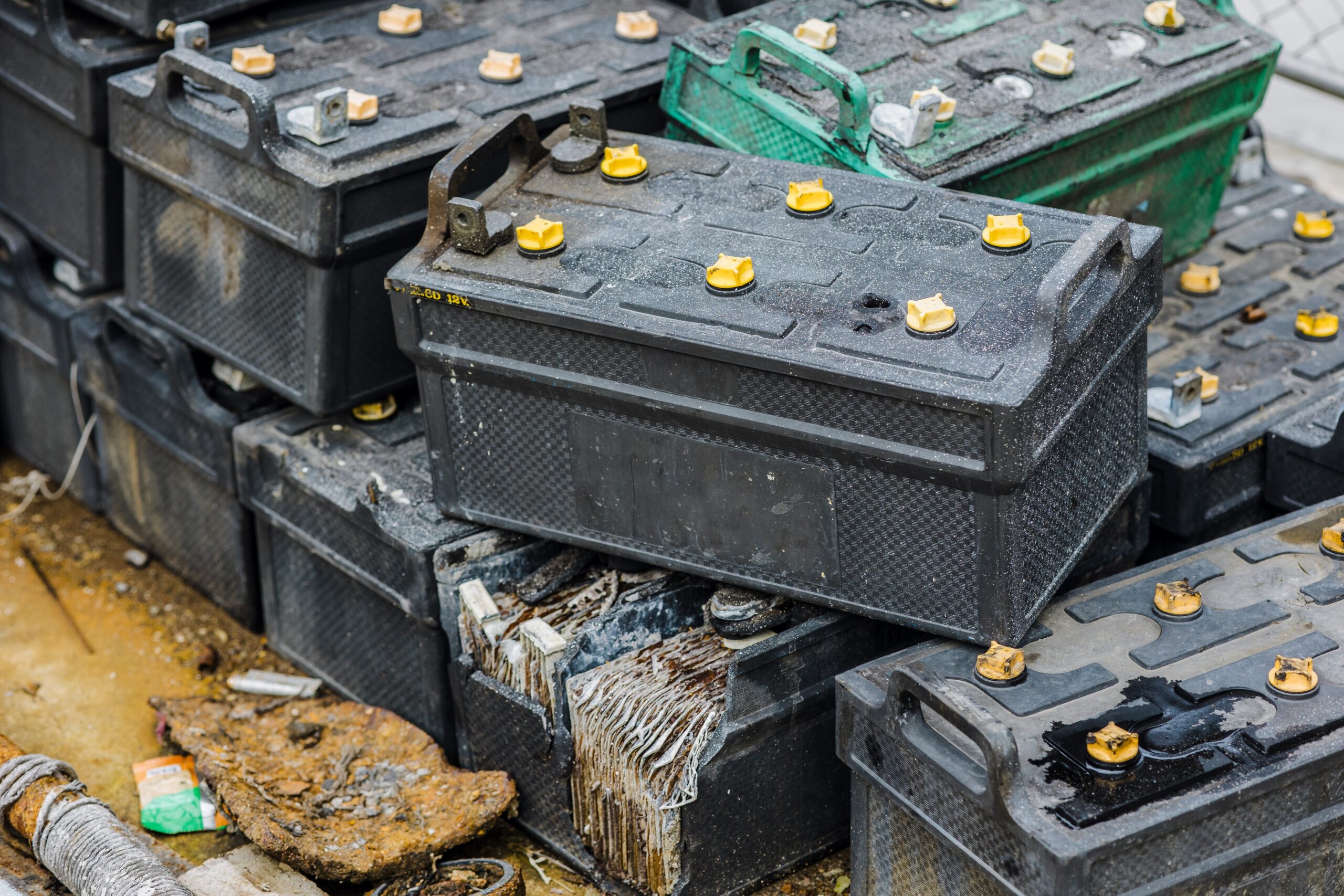
Lead-acid batteries are one of the most common rechargeable battery types used in vehicles, backup power systems, forklifts, golf carts, marine equipment, telecom systems, emergency lighting, and industrial applications.
They have been around for a long time because they are dependable, cost-effective, and capable of delivering strong power when needed. But while lead-acid batteries may look simple from the outside, they contain several important internal materials that work together to store and release energy.
Understanding what is inside a lead-acid battery helps explain how it works, why it is so widely used, and why proper lead-acid battery recycling matters at the end of its life.
Quick Answer: What Is Inside a Lead-Acid Battery?
A lead-acid battery contains lead plates, lead dioxide plates, sulfuric acid electrolyte, separators, plastic casing, terminals, and internal connectors.
In simple terms:
“Lead” refers to the battery’s main active material.
“Acid” refers to the sulfuric acid electrolyte inside the battery.
Together, these materials create a chemical reaction that stores energy when the battery is charged and releases electricity when the battery is used.
Because lead-acid batteries contain recoverable materials, they should be recycled through a proper battery recycling process instead of being thrown away or left in storage.
Lead Plates
Lead plates are one of the most important parts of a lead-acid battery. Inside the battery, there are negative plates made mostly from sponge lead.
These plates help store and release electrical energy during the battery’s charge and discharge cycle. When the battery is used, the lead reacts with the sulfuric acid electrolyte to produce electricity.
The amount, size, and arrangement of the lead plates can affect how much power the battery can deliver and how long it can operate.
Lead Dioxide Plates
The positive plates inside a lead-acid battery are usually made with lead dioxide. These plates work with the negative lead plates and the electrolyte to create the battery’s chemical reaction.
When the battery discharges, the lead dioxide and sponge lead react with the sulfuric acid. When the battery is recharged, the reaction reverses and restores the battery’s stored energy.
This reversible chemical reaction is what makes lead-acid batteries rechargeable.
Sulfuric Acid Electrolyte
The electrolyte inside a lead-acid battery is made from sulfuric acid mixed with water. This liquid or immobilized material allows ions to move between the positive and negative plates.
In flooded lead-acid batteries, the electrolyte moves freely inside the battery. In sealed lead-acid batteries, AGM batteries, and Gel batteries, the electrolyte is held in place or immobilized.
The electrolyte is essential to how the battery works, but it also means damaged batteries should be handled carefully. A cracked or leaking lead-acid battery can expose acid and should be separated from intact batteries before recycling.
Separators
Separators are thin materials placed between the positive and negative plates. Their job is to keep the plates from touching each other while still allowing the chemical reaction to happen.
Without separators, the plates could short circuit inside the battery. That would prevent the battery from working properly and could damage the battery.
Separators are usually made from plastic or other porous materials that allow ion movement while keeping the internal plates apart.
Plastic Battery Case
The outside case of a lead-acid battery is usually made from durable plastic. This casing protects the internal plates, electrolyte, separators, and connections.
The case also gives the battery its shape and helps contain the internal materials during normal use. In vehicle batteries, forklift batteries, UPS batteries, and other industrial lead-acid batteries, the casing must be strong enough to handle weight, vibration, and regular movement.
At the end of the battery’s life, the plastic casing can often be separated during the recycling process.
Terminals and Internal Connections
Lead-acid batteries also include terminals and internal connectors. The terminals are the external contact points where cables attach to the battery. These allow electricity to flow from the battery into the vehicle, equipment, or system it powers.
Inside the battery, connectors link the cells together so the battery can produce the right voltage and output. These parts may contain lead or other conductive materials.
Corroded, broken, or damaged terminals are common signs that a battery may need replacement or careful handling before recycling.
Different Lead-Acid Battery Designs
Not every lead-acid battery is built the same way. Flooded lead-acid batteries contain liquid electrolyte and usually need to stay upright. Sealed lead-acid batteries are designed to be lower maintenance. AGM batteries use absorbent glass mats to hold the electrolyte in place. Gel batteries use a thickened electrolyte for stable deep-cycle performance.
Even though these designs are different, they all use the same basic lead-acid chemistry.
Why Lead-Acid Battery Recycling Matters
Lead-acid batteries contain materials that should not be wasted. Lead, plastic, and other components can be recovered through proper recycling channels.
Recycling also helps prevent old batteries from sitting in garages, warehouses, maintenance rooms, server rooms, utility spaces, fleet yards, and equipment storage areas for years.
A dead lead-acid battery may no longer power equipment, but it still contains materials that need proper handling.
How Battery Recycling & Solutions Helps
Battery Recycling & Solutions helps businesses manage lead-acid battery recycling for commercial quantities and bulk battery loads.
This can include car batteries, truck batteries, sealed lead-acid batteries, AGM batteries, Gel batteries, UPS batteries, forklift batteries, telecom batteries, backup power batteries, and damaged lead-acid batteries.
For businesses with used batteries in storage, Battery Recycling & Solutions provides a practical path for pickup, sorting, and proper recycling.
Frequently Asked Questions About Lead-Acid Batteries
What is the main material inside a lead-acid battery?
The main materials are lead, lead dioxide, sulfuric acid electrolyte, plastic casing, separators, and terminals.
Are lead-acid batteries recyclable?
Yes. Lead-acid batteries can be recycled through the proper battery recycling process.
What is the acid inside a lead-acid battery?
The electrolyte is made from sulfuric acid mixed with water.
Are AGM batteries lead-acid batteries?
Yes. AGM batteries are a type of sealed lead-acid battery.
Can lead-acid batteries go in the trash?
No. Lead-acid batteries should not be thrown into regular trash. They should be recycled properly.
Final Thoughts
Lead-acid batteries may look like simple blocks of plastic from the outside, but inside they contain lead plates, lead dioxide, sulfuric acid electrolyte, separators, terminals, and internal connections that work together to store and release energy.
That combination makes them useful in vehicles, backup power, industrial equipment, mobility systems, and many commercial applications.
When they reach the end of their life, proper recycling helps recover reusable materials and keeps old batteries out of the wrong waste stream. Battery Recycling & Solutions helps businesses manage lead-acid battery recycling in a cleaner, more organized, and responsible way.