Batteries power almost everything around us, from laptops and cell phones to vehicles, tools, backup systems, meters, medical devices, and warehouse equipment. But when those batteries stop working, they still contain materials that should not be wasted or thrown into regular trash.
Battery recycling gives used batteries a proper end-of-life path. Instead of sitting in storage or being mixed with general waste, batteries are collected, sorted, processed, and routed toward material recovery. The exact process depends on the battery type, condition, chemistry, and volume.
For businesses, this matters because batteries can build up quickly during IT refreshes, equipment upgrades, facility cleanouts, fleet maintenance, and daily operations. Battery Recycling & Solutions helps businesses manage those batteries through organized pickup, sorting, and recycling support.
Step One: Batteries Are Collected
The recycling process starts with collection. Used batteries may come from offices, warehouses, schools, municipalities, repair shops, medical facilities, data centers, utilities, or industrial sites.
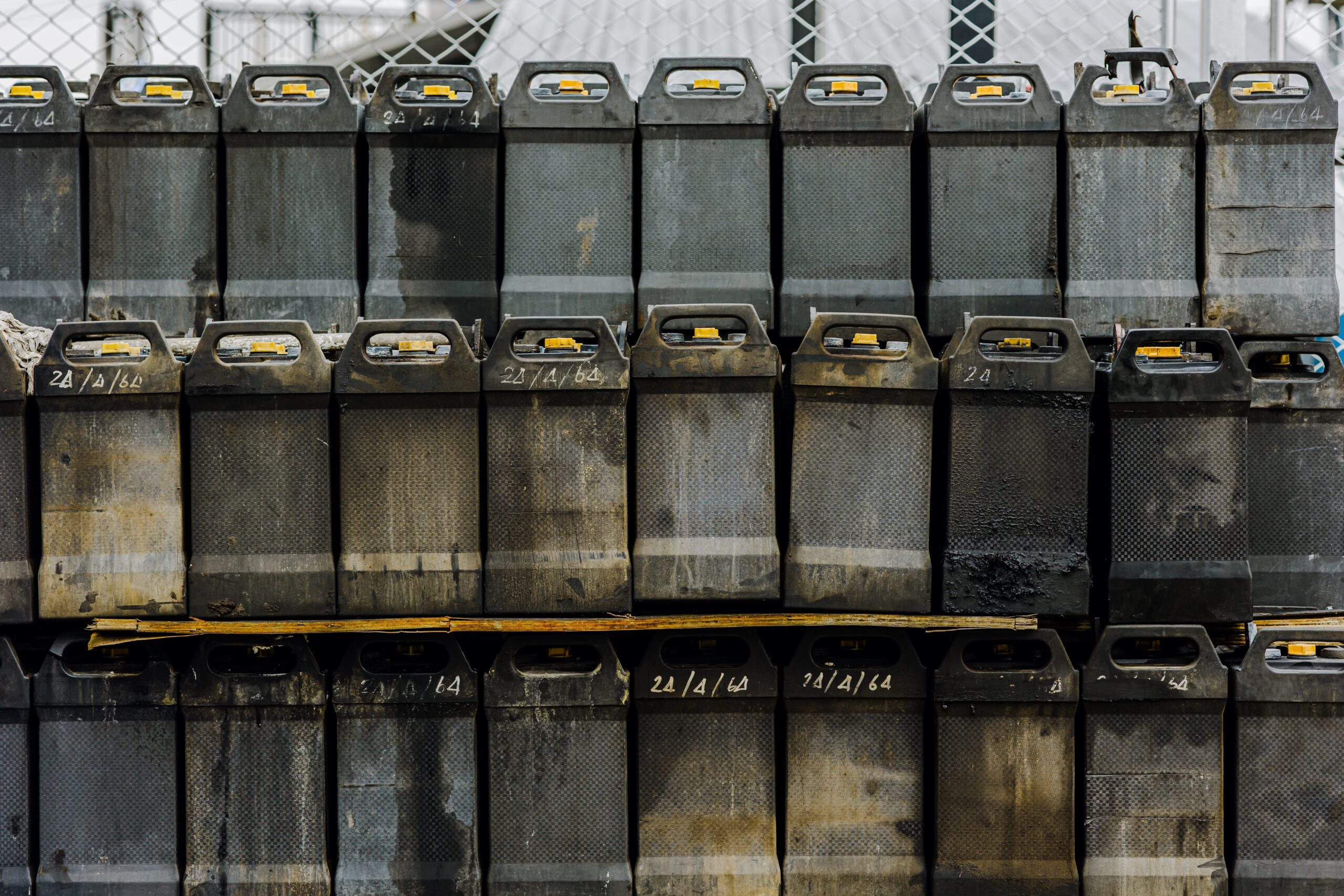
Some batteries are small, like alkaline batteries, button cells, and laptop batteries. Others are much larger, such as lead acid batteries, UPS batteries, forklift batteries, electric vehicle batteries, and energy storage batteries.
Before batteries can be recycled, they need to be gathered in a controlled way. That usually means keeping them separate from regular trash, storing them in labeled containers, and keeping damaged batteries apart from normal used batteries.
Our guide on how to properly store batteries explains best management procedures and methods to properly store batteries prior to recycling.
Step Two: Batteries Are Sorted by Type
Sorting is one of the most important parts of battery recycling. Not all batteries are made the same, and different chemistries require different recycling methods.
Lithium-ion batteries, lead acid batteries, alkaline batteries, NiCad batteries, NiMH batteries, lithium primary batteries, silver oxide batteries, and other specialty batteries may all look simple from the outside, but the materials inside can be very different.
Sorting helps determine how each battery should be handled, packaged, transported, and processed. It also helps reduce the risk of damaged or incompatible batteries being mixed together.
Step Three: Batteries Are Prepared for Safe Handling
After sorting, batteries may be prepared for safe movement and processing. This can include protecting terminals, separating damaged batteries, organizing batteries by chemistry, and making sure the load is stable.
Damaged batteries require extra care. A battery that is swollen, leaking, cracked, burned, corroded, crushed, unusually hot, or punctured should not be treated like a normal used battery.
This step helps make the recycling process cleaner, safer, and more organized.
Step Four: Materials Are Recovered
Once batteries reach the proper recycling process, they may be broken down into their main materials. The exact process depends on the battery chemistry.
Lead acid batteries may be processed to recover lead, plastic, and other components. Lithium-ion batteries may be processed to recover materials such as lithium, nickel, cobalt, manganese, copper, aluminum, graphite, steel, plastics, and battery components. Alkaline and other batteries may follow different recovery paths depending on their makeup.
The goal is to recover useful materials and reduce the amount of battery waste that ends up in the wrong place.
Step Five: Materials Move Into New Uses
Recovered battery materials may be refined, processed, or directed into manufacturing and industrial material streams. Not every material becomes a new battery, but recycling still helps keep valuable resources in circulation.
This is one reason battery recycling is important. Many batteries contain metals and components that took energy, labor, and resources to produce. Recycling helps give those materials another purpose instead of wasting them.
Why Proper Battery Recycling Matters
Battery recycling is about more than getting rid of old batteries. It helps reduce clutter, improve safety, recover useful materials, and create a more responsible process for managing end-of-life batteries.
For businesses, the best approach is simple: identify the batteries you have, store them safely, separate damaged units, avoid mixing batteries with regular waste, and recycle them through the proper process.
Final Thoughts
When batteries are recycled, they go through a process of collection, sorting, safe handling, material recovery, and reuse of recovered materials. The process may vary by battery type, but the goal stays the same: keep batteries out of the regular waste stream and recover the materials inside.
Battery Recycling & Solutions helps businesses manage used batteries, mixed battery loads, damaged batteries, and commercial battery recycling projects with a practical and organized approach.