
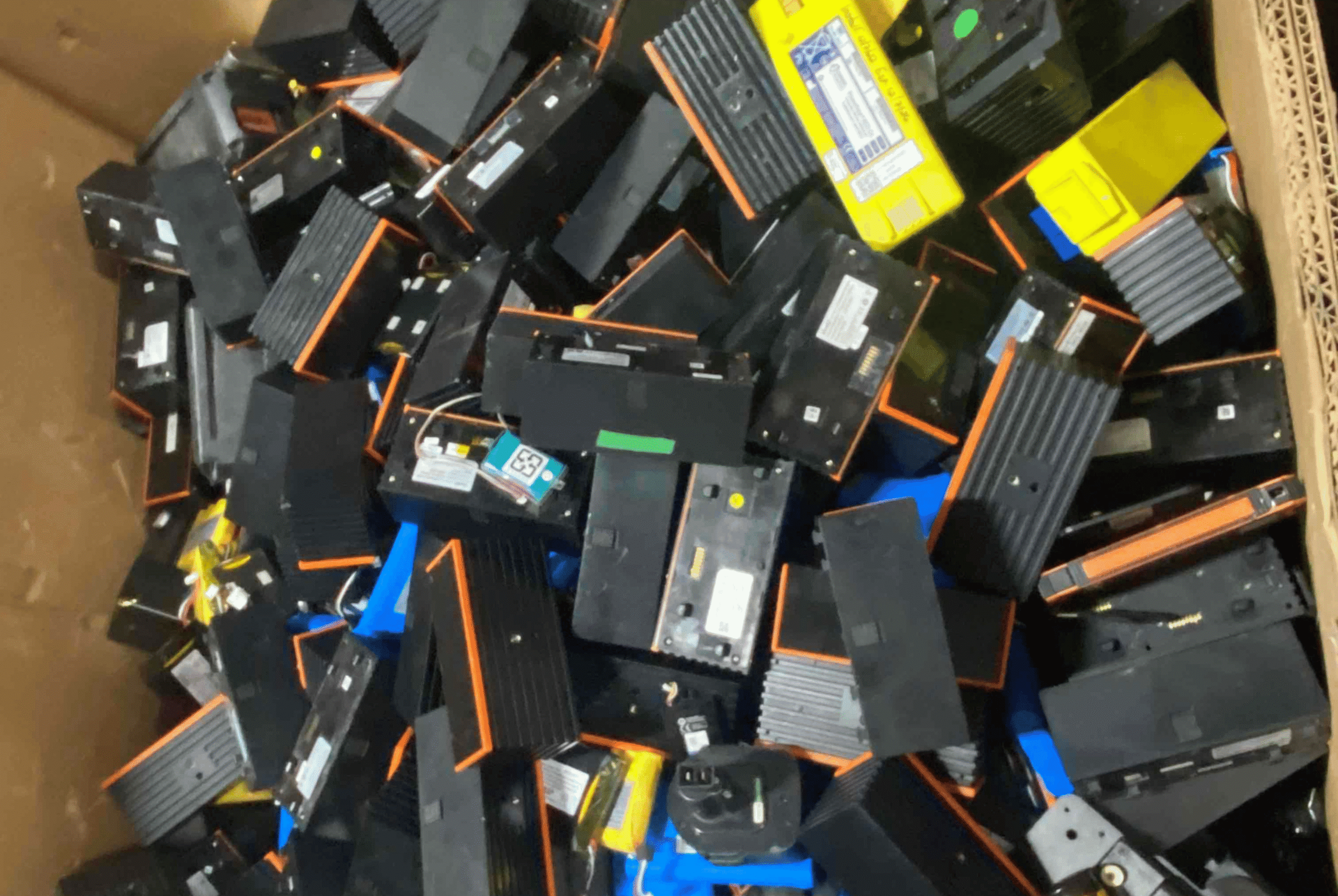
Lithium batteries are used almost everywhere now. They power laptops, phones, scanners, tablets, power tools, medical devices, backup systems, electric equipment, and many other products that businesses rely on every day.
That convenience comes with a responsibility. When lithium batteries reach the end of their usable life, they should not be tossed into regular trash, mixed with general e-waste, or stored in random boxes without a plan. Lithium battery recycling helps businesses manage these batteries properly, reduce storage risks, and keep valuable battery materials moving into responsible recycling channels.
For companies, schools, municipalities, warehouses, offices, healthcare facilities, and industrial operations, the challenge is often not knowing where to start. Battery Recycling & Solutions helps businesses identify, sort, collect, and recycle lithium batteries through an approved recycling process built for commercial and bulk battery needs.
What Is Lithium Battery Recycling?
Lithium battery recycling is the process of collecting, sorting, handling, and processing used lithium-based batteries so they can be managed properly at end of life.
In simple terms, it means taking lithium batteries out of the waste stream and sending them through the right recycling process instead of throwing them away.
Lithium battery recycling usually involves:
- Identifying the type of lithium battery
- Separating batteries from general waste
- Preparing batteries for safe storage and transport
- Sorting batteries by chemistry, condition, and format
- Sending them to a qualified recycling process
- Recovering or processing usable battery materials where possible
Lithium batteries are not all the same. Some are small rechargeable batteries from electronics. Others are larger packs from equipment, vehicles, tools, solar systems, or backup power units. That is why proper sorting and handling matter.
Why Lithium Battery Recycling Matters
Lithium batteries are powerful for their size. That is one reason they are so common in modern electronics and equipment. But that same stored energy can create problems when batteries are damaged, crushed, overheated, mixed with the wrong materials, or handled carelessly.
For businesses, lithium battery disposal is not just about getting rid of old batteries. It is about managing a material that can create safety, storage, transportation, and environmental concerns if it is ignored.
Proper lithium battery recycling helps businesses:
- Keep batteries out of regular trash
- Reduce the chance of improper handling
- Clear out old, swollen, damaged, or unusable batteries
- Manage bulk battery loads more efficiently
- Support responsible recycling practices
- Create a more organized battery disposal process
Many companies have lithium batteries building up in storage closets, maintenance rooms, IT departments, warehouses, and service vehicles. Over time, those batteries can become harder to manage. A clear recycling plan helps prevent that buildup from becoming a bigger operational issue.
How Lithium Batteries Work and What They Are Made Of
Lithium batteries store and release energy through chemical reactions inside the cell. In rechargeable lithium-ion batteries, lithium ions move between internal materials during charging and discharging.
That sounds technical, but the basic idea is simple. The battery has internal components that hold and move energy. When the device is in use, the battery releases that energy. When it is charged, energy is pushed back into the battery.
Most lithium batteries contain several important parts:
- Anode material
- Cathode material
- Electrolyte
- Separator
- Current collectors
- Outer casing or packaging
- Battery management components in larger packs
Different lithium battery types use different chemistries. For example, lithium-ion battery recycling may involve batteries that contain chemistries such as lithium cobalt oxide, lithium iron phosphate, lithium nickel manganese cobalt, lithium polymer, or other lithium-based designs.
That chemistry matters because it affects how the battery performs, how it should be handled, and how it may be processed at end of life.
The Main Benefits of Lithium Battery Recycling
It Helps Businesses Manage Batteries Responsibly
Many businesses use lithium batteries without thinking about what happens after they fail or lose performance. Recycling gives those batteries a proper end-of-life path.
Instead of piling them up or mixing them with trash, businesses can place them into a managed recycling stream. That makes disposal more organized and easier to track internally.
It Reduces Battery Storage Problems
Old lithium batteries can accumulate quickly. IT departments may have laptop batteries. Maintenance teams may have power tool batteries. Warehouses may have scanner batteries, equipment batteries, or backup battery packs.
Lithium battery recycling gives businesses a way to move those batteries out of storage before they become a larger housekeeping or safety concern.
It Supports Material Recovery
Lithium batteries can contain materials that are useful in recycling and manufacturing supply chains. Depending on the battery chemistry and recycling method, materials such as lithium, cobalt, nickel, copper, aluminum, steel, graphite, and other components may be recovered or processed.
Not every battery has the same recovery value, but keeping batteries in proper recycling channels is still the better option compared to disposal in ordinary waste.
It Helps Reduce Improper Disposal
Lithium batteries do not belong in standard trash containers. They also should not be tossed into mixed scrap piles without proper preparation.
Recycling helps reduce the risk of batteries being crushed, punctured, or exposed to conditions that can create problems. For businesses handling bulk loads, this is especially important.
It Creates a Cleaner Internal Process
A clear battery recycling plan makes life easier for facility managers, operations teams, and IT departments.
Instead of asking employees to guess what to do with old batteries, businesses can establish a simple process: collect, separate, store, and schedule pickup or recycling service. That keeps the process consistent.
The Main Challenges of Lithium Battery Disposal
Lithium Batteries Can Be Difficult to Identify
One of the biggest challenges is sorting. Many batteries look similar, but they may have different chemistries, sizes, voltages, and handling requirements.
A small lithium-ion cell from a laptop is different from a large lithium battery pack used in industrial equipment. A lithium iron phosphate battery is different from a lithium polymer pouch cell. Damaged batteries may need even more careful handling.
Damaged Batteries Need Extra Attention
Batteries that are swollen, leaking, punctured, crushed, burned, or unusually hot should be treated carefully. These batteries may present higher handling concerns and should be separated from normal batteries.
Businesses should not ignore damaged lithium batteries or mix them into a general collection bin. They should be identified and handled through the proper recycling process.
Mixed Battery Loads Can Create Confusion
Businesses often generate more than one battery type. A single facility may have lithium-ion batteries, alkaline batteries, lead acid batteries, nickel-cadmium batteries, nickel-metal hydride batteries, and power tool batteries.
When everything is mixed together, sorting becomes harder. That is why battery recycling programs often start with proper identification and separation.
Transportation and Packaging Matter
Lithium batteries need to be prepared correctly before they are moved. Terminals may need to be protected, batteries may need to be separated, and damaged units may require special handling.
For businesses with bulk loads, this is one reason it helps to work with an experienced battery recycling provider instead of trying to figure it out alone.
Not Every Battery Has the Same Recycling Value
Some lithium batteries are more valuable to recycle than others. Battery size, chemistry, condition, and volume can all affect the recycling process.
That does not mean lower-value batteries should be thrown away. It simply means businesses should understand that lithium battery recycling is not always one simple process for every battery type.
Common Uses for Lithium Batteries
Lithium batteries are common because they are lightweight, rechargeable, and capable of storing a lot of energy for their size. Businesses may find them in more places than they expect.
Common sources include:
- Laptop computers
- Cell phones and tablets
- Two-way radios
- Barcode scanners
- Medical devices
- Power tools
- E-bike and scooter batteries
- Backup power units
- Solar battery systems
- Electric forklifts and warehouse equipment
- Security systems
- Testing equipment
- Data center and IT hardware
- Consumer electronics collected through municipal programs
Offices may generate laptop and phone batteries. Warehouses may generate scanner and equipment batteries. Municipalities may collect lithium batteries from residents or public facilities. Manufacturers may have larger volumes from products, tools, prototypes, or returned goods.
Because lithium batteries are found in so many environments, proper battery recycling is important across many industries.
Why Businesses Need Proper Lithium Battery Recycling
Lithium batteries should not be handled like ordinary waste. They contain stored energy, mixed materials, and chemistry-specific components that require proper management.
For businesses, proper recycling starts with a few practical steps.
Identify the Batteries
The first step is knowing what you have. Look for labels, markings, device types, battery shape, and chemistry information.
Some batteries may say lithium-ion, Li-ion, lithium polymer, LiPo, LiFePO4, LFP, or another chemistry. Others may not be clearly marked, especially if they are older, damaged, or removed from equipment.
Separate Lithium Batteries From General Waste
Lithium batteries should be kept out of regular trash and separated from general scrap. They should also be kept away from materials that could crush, puncture, or damage them.
This is especially important in warehouses, maintenance areas, IT cleanouts, and recycling collection events where many materials may be handled at once.
Watch for Damaged or Swollen Batteries
Damaged lithium batteries should be separated from normal batteries. Swollen laptop batteries, crushed packs, leaking cells, burned batteries, and batteries with exposed wires should not be casually mixed with other materials.
If your business has damaged batteries, it is best to get guidance before moving or packaging them.
Store Batteries in a Controlled Area
Businesses should avoid leaving batteries scattered around the facility. Use a designated battery collection area that is dry, secure, and away from heavy traffic.
The goal is simple: keep batteries organized, visible, and protected until they can be recycled.
Work With a Battery Recycling Provider
For commercial volumes, it usually makes sense to work with a company that understands battery sorting, pickup, and proper recycling. This is especially true when batteries are mixed, damaged, large, or generated in bulk.
Battery Recycling & Solutions helps businesses manage lithium battery recycling in a way that is practical and built around commercial needs.
How Lithium Batteries Compare to Similar Battery Types
Lithium Batteries vs Alkaline Batteries
Alkaline batteries are common in basic electronics like remotes, clocks, flashlights, and small devices. They are usually single-use and are not built for the same high-energy applications as lithium batteries.
Lithium batteries are often rechargeable and used in higher-performance devices. They usually require more careful handling at end of life, especially when collected in bulk or removed from electronics.
Lithium Batteries vs Lead Acid Batteries
Lead acid batteries are commonly found in vehicles, UPS systems, golf carts, alarm systems, and industrial backup power applications. They are heavier and have a very different chemistry from lithium batteries.
Lithium batteries are usually lighter and more energy-dense. They are common in portable electronics, tools, electric mobility devices, and modern energy storage systems. Both battery types should be recycled, but they are sorted and processed differently.
Lithium Batteries vs Nickel-Cadmium Batteries
Nickel-cadmium batteries, often called Ni-Cd batteries, are used in some older tools, emergency lighting, industrial systems, and specialty equipment. They contain different materials and should not be mixed with lithium batteries without proper sorting.
Lithium battery recycling focuses on lithium-based chemistries, while Ni-Cd recycling follows a different process. For businesses with mixed battery loads, sorting is important.
Lithium-Ion Batteries vs Lithium Primary Batteries
Lithium-ion batteries are rechargeable. They are common in laptops, phones, power tools, tablets, scanners, and many commercial devices.
Lithium primary batteries are usually non-rechargeable. They may be used in meters, sensors, medical devices, security equipment, and specialty electronics.
Both can fall under lithium battery disposal needs, but they are not the same. They should be identified properly before recycling.
When Lithium Battery Recycling Is the Right Fit
Lithium battery recycling makes sense when a business has lithium batteries that are no longer usable, safe, wanted, or needed.
It is a strong fit for:
- Businesses replacing old laptops, tablets, or phones
- Warehouses retiring scanner batteries or equipment batteries
- Contractors managing power tool battery waste
- Schools and universities clearing out old electronics
- Municipalities collecting batteries from public programs
- Healthcare facilities replacing device batteries
- Manufacturers handling returns, rejects, or surplus battery packs
- Facilities managing damaged, swollen, or end-of-life lithium batteries
- Companies with bulk battery loads from cleanouts or upgrades
In simple terms, if your organization has lithium batteries sitting in storage or coming out of service, lithium battery recycling is the right next step.
When Lithium Battery Recycling May Not Be Simple
Lithium battery recycling is important, but it is not always as simple as placing every battery in one box.
It may require extra care when:
- Batteries are damaged or swollen
- Battery labels are missing
- Chemistries are mixed
- Batteries are attached to electronics
- Packs are unusually large or heavy
- Terminals or wires are exposed
- The business has a large bulk load
- Batteries are coming from multiple locations
These situations do not mean the batteries cannot be recycled. They just mean the recycling process should be handled carefully.
For businesses, the best approach is to ask questions early. A quick review of battery types, condition, volume, and location can help determine the right recycling option.
How Battery Recycling & Solutions Helps With Lithium Battery Recycling
Battery Recycling & Solutions helps businesses manage lithium battery recycling with a focus on proper handling, commercial service, and practical support.
The process can help with:
- Lithium battery identification
- Lithium-ion battery recycling
- Commercial battery recycling
- Bulk battery pickup
- Mixed battery sorting
- End-of-life battery management
- Proper recycling for damaged or unwanted batteries
- Support for businesses, municipalities, facilities, and commercial generators
For many organizations, the hardest part is not deciding whether batteries should be recycled. It is figuring out how to collect them, sort them, and move them out of the building safely and efficiently.
Battery Recycling & Solutions helps make that process easier. Whether your business has a few containers of lithium batteries or a larger bulk load, the goal is to provide a clear recycling path that keeps batteries out of the regular waste stream.
Frequently Asked Questions About Lithium Battery Recycling
What is lithium battery recycling?
Lithium battery recycling is the process of collecting, sorting, and processing used lithium batteries so they can be managed properly at end of life. It helps businesses keep lithium batteries out of regular trash and move them into responsible recycling channels.
Can lithium-ion batteries be recycled?
Yes. Lithium-ion battery recycling is available for many common rechargeable batteries, including batteries from laptops, phones, tablets, tools, scanners, electronics, and certain equipment. The exact process depends on the battery type, condition, and volume.
How should businesses dispose of lithium batteries?
Businesses should separate lithium batteries from ordinary trash, identify the battery type when possible, protect them from damage, and work with a proper battery recycling provider. Bulk loads, damaged batteries, and mixed battery types should be handled with extra care.
Why do lithium batteries need special handling?
Lithium batteries store energy and can create risks if they are crushed, punctured, overheated, or improperly stored. Proper handling helps reduce those risks and keeps the batteries moving through the right recycling process.
Are damaged lithium batteries recyclable?
Many damaged lithium batteries can still be managed through proper recycling channels, but they may require special handling. Swollen, leaking, crushed, burned, or punctured batteries should be separated and reviewed before transport or recycling.
What types of lithium batteries can businesses recycle?
Businesses may recycle lithium-ion batteries, lithium polymer batteries, lithium iron phosphate batteries, rechargeable lithium packs, laptop batteries, cell phone batteries, power tool batteries, scanner batteries, and other lithium-based battery types. Sorting may be needed depending on the load.
Does Battery Recycling & Solutions recycle lithium batteries?
Yes. Battery Recycling & Solutions helps businesses, facilities, municipalities, and commercial generators with lithium battery recycling, lithium-ion battery recycling, battery sorting, bulk pickup, and responsible battery recycling services.
Conclusion
Lithium batteries are an important part of modern business operations, but they need the right end-of-life plan. They should not be ignored, stored indefinitely, or thrown into regular trash. A proper lithium battery recycling process helps businesses manage these batteries responsibly, reduce clutter, and support safer material handling.
The best approach is simple: identify the batteries, separate them from general waste, watch for damage, store them properly, and work with an experienced recycling provider.
For businesses with lithium batteries, lithium-ion batteries, mixed battery loads, or bulk battery disposal needs, Battery Recycling & Solutions can help create a practical path forward through responsible commercial battery recycling and pickup services.