
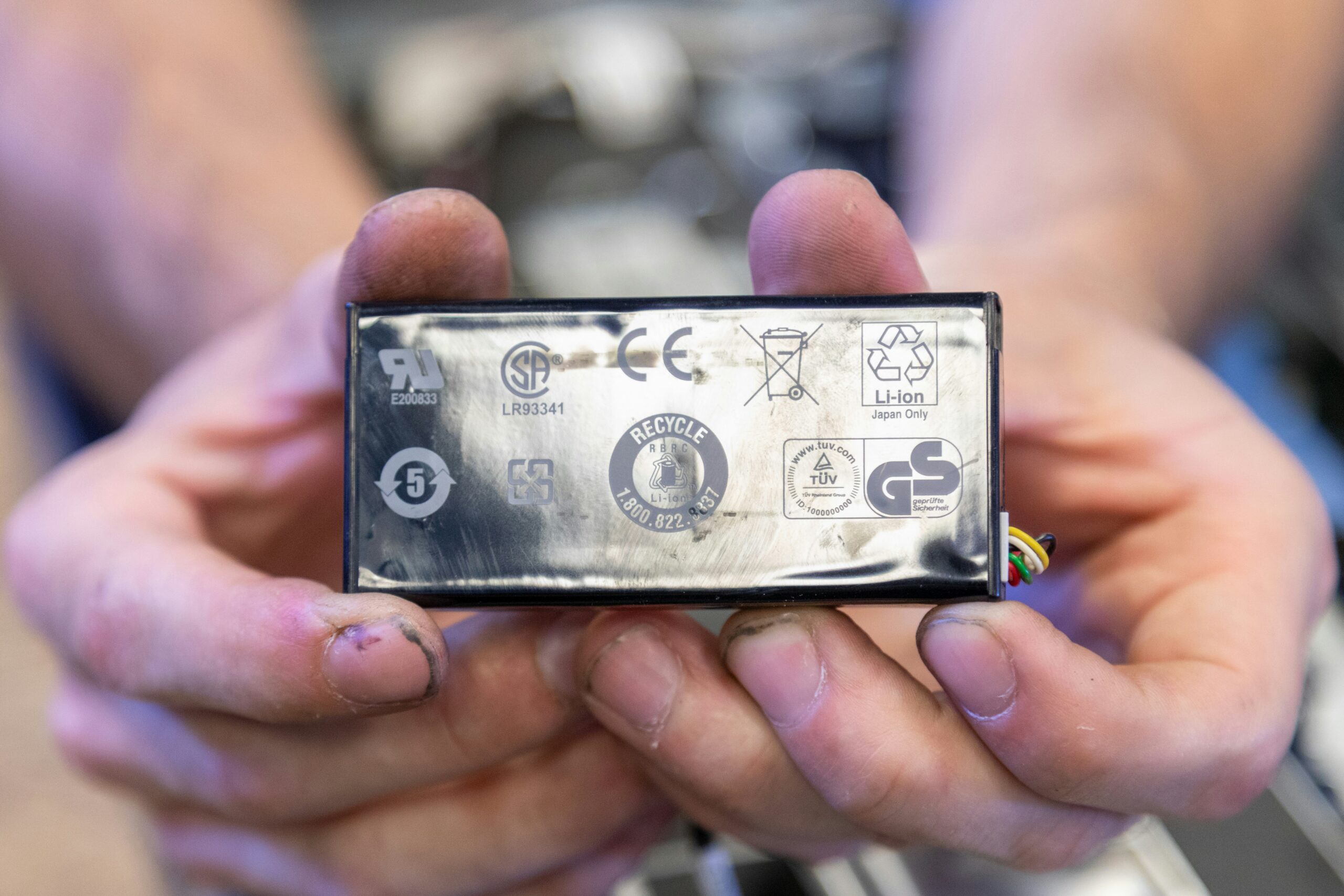
Lithium-polymer batteries, often called LiPo batteries, are a type of rechargeable lithium battery commonly used in modern electronics, portable devices, drones, power banks, and other compact equipment. They are popular because they are lightweight, flexible in design, and capable of storing a strong amount of energy in a small space.
As more products rely on rechargeable battery technology, lithium-polymer batteries have become a major part of the battery waste stream. Understanding what they are, where they are used, and why they require proper recycling is important for businesses, schools, repair shops, warehouses, electronics recyclers, and organizations that manage battery-powered devices.
What Is a Lithium-Polymer Battery?
A lithium-polymer battery is a rechargeable battery that uses lithium-based chemistry and a polymer-style electrolyte or separator system. Unlike many traditional batteries that are built in rigid metal cases, lithium-polymer batteries are often packaged in soft pouch-style cells.
This pouch design allows manufacturers to create thinner, lighter, and more customized battery shapes. That is one reason LiPo batteries are commonly found in compact electronics where space and weight matter.
Lithium-polymer batteries are closely related to lithium-ion batteries. In many applications, they perform a similar job: storing and delivering rechargeable power. However, LiPo batteries are often chosen when a product needs a slim, lightweight, or flexible battery design.
Common Uses for Lithium-Polymer Batteries
Lithium-polymer batteries are used in many everyday and commercial products. Their lightweight design makes them especially useful in devices that need rechargeable power without adding too much size or weight.
LiPo batteries are commonly used in:
- Smartphones and tablets
- Laptops and portable electronics
- Bluetooth speakers and headphones
- Power banks and charging packs
- Drones and remote-control devices
- E-bikes and small mobility devices
- Wearable electronics
- Medical devices
- Portable scanners and testing equipment
- GPS units and communication devices
LiPo batteries are also used in hobby electronics, robotics, security devices, and specialized industrial equipment. Because they can be made in different shapes and sizes, they are often selected for products where a standard battery pack would not fit well.
Why Lithium-Polymer Batteries Are Popular
The main advantage of lithium-polymer batteries is their design flexibility. They can be thin, lightweight, and shaped for compact devices. This makes them useful for manufacturers that want to create smaller and more portable electronics.
They also offer strong energy output for their size. That is why they are common in drones, RC equipment, and portable devices that need quick power delivery.
However, these benefits also come with handling concerns. Like other lithium-based batteries, LiPo batteries can become unsafe if they are punctured, crushed, overheated, swollen, or short-circuited.
Why LiPo Batteries Need Proper Recycling
Lithium-polymer batteries should never be placed in regular trash, dumpsters, or mixed recycling bins. Because they contain stored energy, improper disposal can create fire risks, especially if the battery is damaged or terminals come into contact with metal.
Used LiPo batteries may also contain materials such as lithium, copper, aluminum, graphite, and other recoverable components. Proper LiPo battery recycling helps keep these materials out of the wrong waste streams and supports more responsible battery management.
Businesses that collect or handle LiPo batteries should inspect them for swelling, damage, leaking, heat, or exposed wires. Damaged batteries should be separated and handled with extra care.
How Businesses Should Manage Used Lithium-Polymer Batteries
Organizations that generate lithium-polymer battery waste should have a simple process in place. Batteries should be stored in a cool, dry area, kept away from heat and flammable materials, and protected from crushing or puncturing.
Exposed terminals should be taped when needed to help prevent short circuits. Batteries should also be sorted by type when possible, especially if a facility handles mixed battery chemistries.
Working with a battery recycling provider can help businesses safely manage LiPo batteries from electronics, devices, tools, drones, and commercial equipment.
Final Thoughts
Lithium-polymer batteries are an important part of modern rechargeable technology. They are lightweight, compact, and commonly used in phones, tablets, drones, power banks, wearables, and many other devices.
While they are useful, they must be handled responsibly at the end of their life. Proper lithium-polymer battery recycling helps reduce fire risks, recover valuable materials, and keep battery waste out of improper disposal channels.